1961
Back in the late fifties, my father began to build a small summer cottage in Falmouth on Cape Cod. He cleared the land, laid the cement block foundation, framed, sided, and shingled the house, and wired and plumbed it, all without power tools. He drove the well with a sledge.
The only time Dad hesitated was when it was time to “turn on the juice” for the first time. He was a fireman , not an electrician, so he decided to request the presence of a Falmouth fire company when he flipped the master switch for that first time. A Saturday date and time were arranged. It would be an event.
Dad’s sister Marguerite owned a waterfront cottage across the road. She had monitored her brother’s handiwork carefully for several years, and was excited about the cottage’s imminent completion. On the Friday evening before the scheduled switch-throwing, as she often did, she used her key to take a look at the most recent progress.
At about ten o’clock, my father got a call at work from his sister. “Hey, Joe,” she chirped, “the electricity works fine, huh?”
1962
My maternal grandparents, Nana and George, lived in Dorchester, an old residential Boston neighborhood. Their home was a gracious Victorian, but it was surrounded by looming three-deckers, many of which were falling into disrepair.
Most of the time when they visited the cottage, George sat in his Buick to get better reception of Curt Gowdy broadcasting the Red Sox and inviting all to "have a 'Gansett." One day though, on a whim, they walked through an open house at a nearby cottage. George turned to Nana and asked, "Would you like to live down here?"
"I'd love to," responded Nana. And that was it. The two lifetime Bostonians became year-round Cape Codders.
One of George's many jobs had been working as a fishcutter on the Boston fishpier. Now, in his retirement, he became obsessed with the idea of catching and filleting his own bluefish and, especially, stripers. He bought a fiberglass runabout with a cantankerous Johnson Seahorse 40. My father had built them a small wooden deck, and George took the leftover lumber and gray stain around the back of the house by the spigot for the hose.
After a couple of mystery-shrouded days of hammering and sawing, and much eye-rolling by Nana, George revealed his masterpiece, a fishcutter's dream. Attached to the back wall of the house was an angled cutting board hinged to a box for storing knives and scalers, stained to match the new deck. And in red paint, on the front of the fishbox, George had proclaimed the object of his pursuit. He had painted the word STRIPPERS.
1964
Every July 4th, Aunt Marguerite and Uncle JJ would host a large cookout on their patio overlooking Eel Pond. The grill was composed of metal refrigerator shelves mounted on bricks. JJ was the originator of blackened chicken--not intentionally blackened, but charred, because at 320 pounds, JJ wasn’t the most agile of backyard chefs. He more than compensated with his lawn dart supremacy, taking on all comers and sending all to ignominious defeat.
On one of these occasions, the revelers gathered above the seawall to watch a tiny 8’ hydroplane skimming down the channel until it hit the wake of a Chris~Craft cruiser. The tiny red boat went aloft, the propellor spinning in air. It wavered on the verge of flipping for a moment, then smashed back onto the surface of the water and sped away. The watchers shook their heads at the stupidity of such a stunt. My father said aloud, “Look at that idiot. I wonder who it is.”
My brother was only too happy to identify the maritime miscreant. “That’s your other son,” he told my father. “That’s Paul.”
1965
The Northern Quahog (hardshell clam) is an estimable shellfish with a long and storied history. The Wampanoags used the purplish shell to make wampum. The state of Rhode Island holds this bivalve in such high esteem that the clam fritter is placed on a par with the state’s most heralded beverage, Del’s Frozen Lemonade. Fine seafood restaurants offer littleneck and cherrystone quahogs, opened and iced, with lemon and cocktail sauce, as an upscale appetizer.
For my family, the quahog was one of several native marine species that became a regular part of our diet. A summer week seldom passed without a gustatory adventure with the hardshell clam--raw, steamed, baked and stuffed, or in chowder. I learned quahogging from a would-be suitor of my sister’s; his speedboat, white Impala convertible, and white clamdigger pants (remember those?) impressed me, but not her. Her wisdom bore out. The young man went on to become the general manager of a string of Foxy Lady strip clubs.
Quahog rakes were for wimps. Our method of shellfishing was treading. The equipment was simple. We would place a bushel basket inside an inner tube and tether it to our waists. A measuring ring was tied to the basket. When the basket was filled, the quahogs were dumped into burlap bags and placed in shallow water.
Quahogs love two elements, mud and eelgrass, that are not usually enjoyed by most waders. Treading involved wading barefoot into beds of eelgrass, settling into a crouch, and moving the feet rhythmically until a quahog is felt. An experienced quahogger can tell a healthy quahog from anything else by feel, but that didn’t prevent stepping on a number of unpleasant objects, living or dead. A spider crab carapace, for example, has spines that will stick into the sole of your foot. You reach down, pull it off, and throw it towards shore. Live blue crabs will sometimes defend their turf against tender toes. Broken whelk shells, horseshoe crab tails, razor clams…you got to know them all.
The bane of our experience, though, was the toadfish. These ugly, large-mouthed relatives of the sculpin like to lay eggs in discarded cans, then back into the can to guard the eggs. Anytime your foot came down on a can, there was a good chance a vengeful toadfish would be looking to clamp its mouth on any available appendage. I once had one swim up the leg of my jams, a situation that produced yelping and high stepping, much to the merriment of the other fishermen. “Good thing he wasn’t hungry,” noted one seasoned pro. This comment, of course, led to much unsubstantiated and mostly derogatory speculation about the size of the toadie's intended meal. I never wore jams again.
At Kelley’s Landing on the Seapit River, we would empty our burlap bags on the concrete floor. Then, under Olin J. Kelley’s watchful eye, we would straddle the heap and sort the shellfish by sliding them backwards between our feet into three smaller piles: Littlenecks, cherrystones, and mediums. Olin paid in cash. A bushel of 'necks back then would bring $37.00. I sometimes wonder what that bushel--opened, iced, with lemon and cocktail sauce--would bring in a raw bar today.
1967
In the Haight-Ashbury section of San Francisco, a coalition of self-proclaimed “freaks” declared the summer of 1967 to be a Summer of Love. Three thousand miles away, a recent Catholic high school graduate had found a summer job at the Pier 37 Valet Mooring Service in Falmouth Harbor on Cape Cod.
Musical talents such as Jimi Hendrix, the Who, Jefferson Airplane, the Grateful Dead, Janis Joplin, and Hugh Masakela astounded audiences at a festival in Monterrey, California.
Meanwhile, a mediocre singer and terrible guitar player was concluding his career in the Corrugated Plywood Jug Band.
The Buffalo Springfield asked people to stop and look at what was going down. Bob Dylan had long since announced that the times were a’changin’, and Barry McGuire had already warned that they’d be no one to save, with the world in a grave. And so a musical wanna-be and boatyard hand had begun to listen and to question.
A brilliant Irish singer-songwriter from Belfast delivered a rollicking song about a romp in the green grass behind the stadium with a brown-eyed girl. The youth had found a brown-eyed girl of his own, two years older, a vacationing college girl from Wisconsin. He would no longer be workin' on mysteries without any clues. The young man’s parents were not happy about this pairing, and their attempt to end it caused him to openly defy them for the first time.
The Doors broke on through that summer with “Light My Fire.” A sixteen-year-old British kid named Steve Winwood rendered a chillingly soulful “Gimme Some Lovin’ ” with the Spencer Davis Group. “White Rabbit” intimated the mysterious influx of drugs into the youth culture. Passion was the key--musical, political, ethical, spiritual--everything was part of a confusing but energizing elixir.
The young man was changed by that summer. He would go off to college through some of the most tumultuous years of American history. He would not get a barbershop haircut for another six years (he felt like he owed it to someone). His birthdate (July 5) would be drawn in the nation’s first draft lottery--#188. And, for the most part, almost four decades later, he has clung to the values and beliefs that he formed in those times.
1969
Every autumn, Dad would dutifully close up the unheated cottage. The beds were stripped, patio furniture consigned to the shed, water and electricity turned off. The daysailer rested on its trailer. The cottage would be deserted and forlorn through the crisp air and clear light of the fall, the bleak winter, and the mist-shrouded promise of the spring.
Or so Dad thought.
On various off-season weekends, a Volkswagen mini-bus, festooned with peace signs and bumper-stickers, would rattle into the driveway. Out would pile as many as four members of the Unwashed Six in full regalia--bellbottomed, fringed, and tie-dyed. With them would be a matching contingent of hippie chicks, ineffably fetching in their halter tops and hip-huggers. One member of this troupe, who shall go unnamed, was the son of the owner of the cottage, one who knew the secrets of priming the pump and locating the master switch. And so the cottage would briefly reawaken.
This aggregation always arrived well-provisioned. Along Rte. 28, we had found a fish market and fried clam joint owned by Joe, a wiry, aging Cape Verdean gentleman. On Friday evenings, Joe was usually slightly intoxicated, and he was furthur intoxicated by the presence of three or four nubile hippie chicks who had forsworn the wearing of undergarments.
"Portagee Joe" loved to flirt with the girls, and they flirted right back, posing for pictures with him, pictures that he proudly displayed behind the cash register. As a result, we left Joe’s Fish Market with some of the greatest bargains in the history of seafood consumption. Two quarts of chowder? Three dollars. Eight steamed lobsters? Five dollars. A dozen stuffed quahogs? Two dollars. If we had visited more frequently, we certainly would have bankrupted poor Joe, but he would have gone out of business winking and smiling.
At the end of the week-end, we would clean the cottage meticulously before packing up our sleeping bags and heading back to school. Although it seemed that we left no sign of our presence, I always thought that Dad was too smart not to figure it out. He hadn’t had a chance to go to college, and I suspect he might secretly have enjoyed the idea of having enabled such frivolity. He never said a word.
The highlight of such weekends was always the same. Our visits somehow seemed often to coincide with the full moon, and on such nights I would take my friends up on the hill at Falmouth Heights, above the Casino. From there we would sip Mateus, listen to the gentle surf, and watch the moon shimmering on the waters of Vineyard Sound. I remember, I remember, I remember.
"The cure for anything is salt water...sweat, tears, or the sea."--Isak Dinesen

About Me
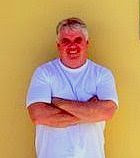
- Paul
- After a period of turmoil, the last few years of my life have remarkably angst-free. I do believe that I may have found happiness. It only took five-and-a-half-decades.
from "The Cool Web"
There’s a cool web of language winds us in,
Retreat from too much joy or too much fear:
We grow sea-green at last and coldly die
In brininess and volubility.
--Robert Graves
Retreat from too much joy or too much fear:
We grow sea-green at last and coldly die
In brininess and volubility.
--Robert Graves
Various and Sundry
- Boating (18)
- Cape Cod (16)
- Cool Places (18)
- Family (39)
- Fishing (18)
- Humor (31)
- Log of Kilty's Wake (12)
- Music (24)
- Personal (34)
- Politics (1)
- Teaching (22)
- The Grammy (11)
- Travel (62)
Archives
-
▼
2005
(41)
-
▼
November
(17)
- Last Call
- My Father Speaks
- "Kilroy was here." And is here, still.
- Eat at Joe's
- Divorce, and the Holidays
- Keeping Mum: A Triptych
- Three Families
- The Cottage
- Surviving Catholic High School
- Thanksgiving, 2002
- More than a Summer Job
- Standing on a Corner in Sedona, Arizona
- Transcendentalists
- There's something fishy in the state of Rhode Island
- The Last Waltz
- My Career as a Jug-bander
- Once More to...E. B. White
-
▼
November
(17)
7 comments:
I love these stories. You realy doi have a book here.
Ditto gannet girl - these need to be in a book (and I'm already warning you, I wanted a signed copy).
:)
Judi
There's JJ. Now I feel at home.
..nice new digs!! E
Paul, wonderful story telling. You definately have a blogspot that should be read in book form next to a blazing fire.
I do have a question: Do you think your sisters boyfriend who later owned all the Foxy Strip Clubs got the idea from your grandfather?
Thanks for stopping by an leaving your link, Paul. You are one with which I had not yet caught up. I've added this j to my bloglines. Don't be a stranger... Lisa :-]
Glad I got to read this the second time around. Ditto what everybody else said.
Sounds like you're having a great summer.
Post a Comment